

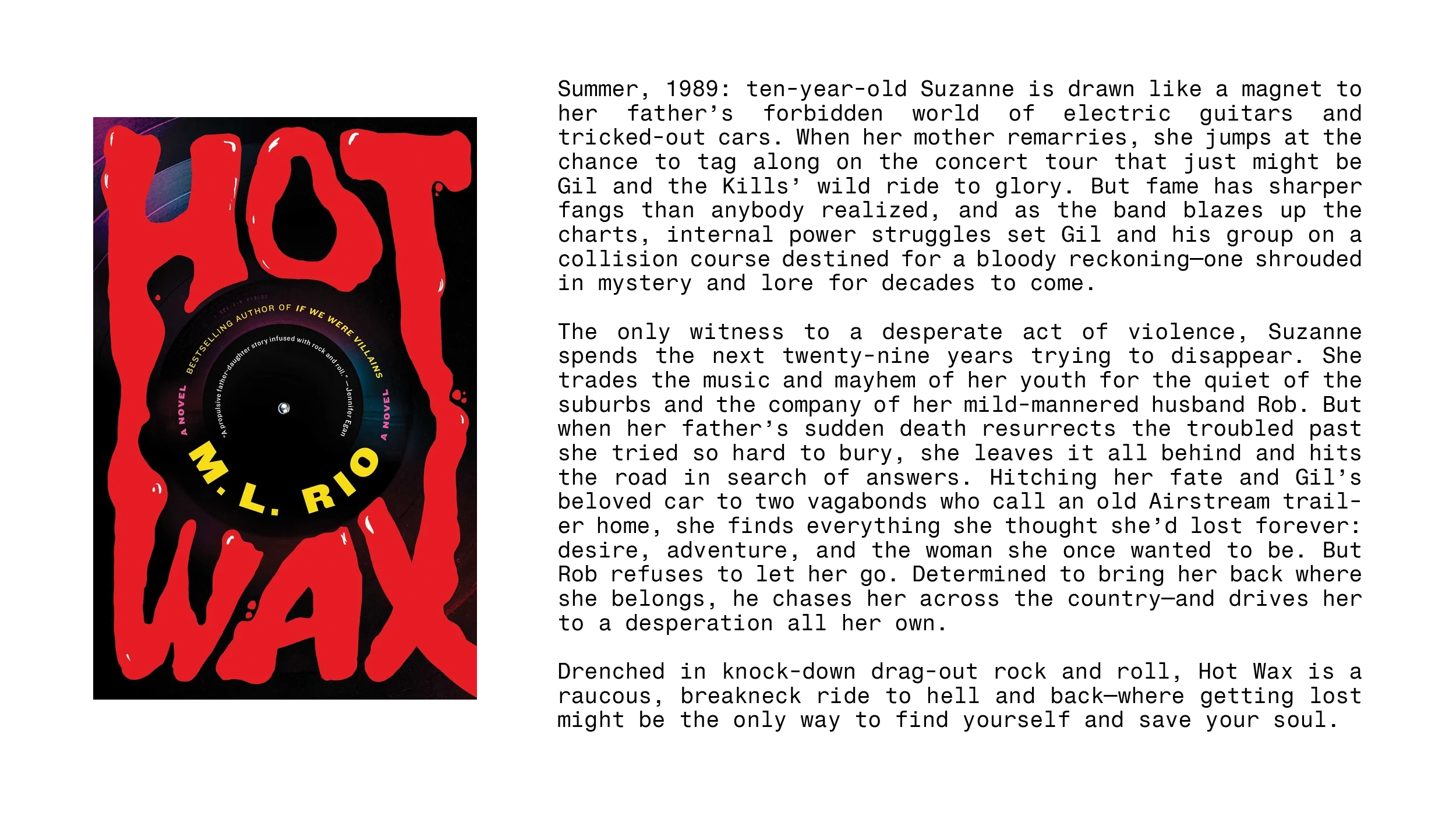
hot wax
exploring m.l. rio's sophomore slam-dunk

“She went to bed every night with her head full of fireworks. She slept like the dead and often had to be carried to lobby call the next morning. She always had a sunburn, she rarely had clean clothes, she read road maps like comic books and never wanted to go home.”
intro
As someone who’s a huge fan of If We Were Villains, it comes as no surprise that I’m also a big fan of M.L. Rio’s follow-up, her sophomore novel, Hot Wax. The universe smiled upon me over the summer, gifting me with an eARC from Netgalley, and I devoured most of this book in one sitting on a late-night flight home from vacation. I read the second half with the speed of a fifth grader doing the summer reading program in 2005, and I exercised immense self-control by not screaming at the top of my lungs when I finished on the plane.
All of which to say, this book spoke to me.
It’s a slow burn, melting like crayons in the desert sun, and it takes a while for the pieces to finally start coming together, but once you figure out where everything is going, it’s FIREWORKS.
After I finished, I could not get these characters out of my head. The story is sticking with me, images flashing through my mind when I least expect it. I want to hold a copy in my hands so I can scribble on it, so I can relive it all, so I can worship it.
So this isn’t a review, exactly. It’s an exploration. It’s not unlike the essay I wrote last summer about Villains, although I promise it won’t be so extensive or intense. I just kept ruminating on themes and ideas, and since nobody else has read this, I needed a place to put down all my thoughts. (It is currently July.)
I apologize in advance to M, if only because I know her sophisticated taste would absolutely hate some of the parallels and connections that I’m making, but that won’t stop me from putting a bunch of Halsey references in here.
If you haven’t read the book yet, there will be spoilers going forward. If you have read the book, you know just why I need to ramble about it for 8k words.
thank you for the music
“Through no fault of their own, some songs were psychically contaminated and couldn’t be cured.”
There’s no question that this book is, first and foremost, about music. For those who don’t obsessively follow M.L. Rio’s online presence (which has, thank god, expanded greatly in the last few years since she got on Substack), you may not know just how intense her love of music goes. Even before she announced this book, she cultivated a reputation for loving vinyl and oldies and classic rock, and it’s been so cool to see her dive deep into her obsession for this story.
I’ve always been fascinated by music fiction, to the extent that the last manuscript I worked on (for 3+ years) was a new adult novel about concerts and pop music. It’s a difficult feat to accomplish, and I say that from experience. Often to write a successful music novel, you have to craft an artist and their lyrics and their persona and their history, on top of whatever plot you’re writing. Even if you’re writing a more contemporary story in the real world, ie there isn’t a fancy magic system you have to build, creating an artist like Gil & The Kills is its own form of world-building. It’s challenging. It’s hard to do well. And most of the content you come up with will never end up on the final pages of your book.
In Gil & The Kills, M has created a band that is classic 80s, and yet somehow it’s something entirely its own. They’re flamboyant, running around on stage in costumes and stage make-up, improvising and performing and playing off each other night after night. The lyrics of their songs are provocative, sometimes romantic, sometimes a little mindless, and yet all of it is fiercely believable. They have presence. They have a reputation. And yet, all of this is almost irrelevant because what matters are the relationships between the players.
As with other music fiction (we’ll get to Daisy Jones later), the heart of this band is a discordant relationship between the two leads. Contrary to a band like Fleetwood Mac, who is most known for a broken romantic pairing between a man and a woman, G&TK is a power-struggle between two young men. On the surface it isn’t technically anything queer (although there are always arguments to be made, and yes, we will talk about that Nebraska concert later on), but the tension is what makes it so delicious. Gil and Skelly spend most of the book leaning into each other, circling each other on stage as they feed off their combined energy and captivate their audiences. For better or worse, the rest of the band (Nash and Ruby) get sidelined (because as they say, nobody cares about the rhythm section), and in the end, it’s this discord that ruins the band. Ish.
(I mean, it’s actually just that one twenty-six year-old is ruined by an injury that leads to drug addiction that is encouraged by label execs who wanted more money, but hey, Gil and Skelly could only butt heads for so long before one of them snapped.)
Music fiction is built in layers. Build up the music in the world as a whole - draw from real artists, build your own to pepper in - then carefully craft your main artist’s history and discography. Flesh out the relationships, the individual characters, the fans and crew they cross paths with. And only then, after you’ve built an entire world around music that nobody’s ever heard, you can begin to write a story.
M does this with G&TK, but she takes it one step further by introducing Babel Mouth later in the work. And while Babel Mouth doesn’t get the same exploration as Gil’s band, we do get a good look at their main singer, Vince Dewitt. I’m still so in awe of how this character is introduced, mainly because up until her entrance on the page during their Kansas show, we’re led to believe she’s just another rock frontman, just some guy who really likes Gil’s band.
While G&TK is painted with loving care by Suzanne’s ten year-old brain, Vince comes across as unsettlingly and at times, otherworldly. Suzanne continues to point out that she feels guilty for feeling so uncertain of another woman, especially since Vince is only about a decade older than Suze, but Vince’s character is portrayed as someone who’s manipulative, power-hungry, and fiercely passionate about herself. Why lie, she’s possibly the most interesting character on the page, apart from Eric Skillman. (It’s no wonder those two came together like magnets.)
I could probably write a whole essay just about the brilliance of Vince Dewitt - her persona, her stage presence, her position as a frontwoman in music in the 80s - but I’ll keep it short and sweet. It’s such a wonderful bait and switch to spend the first half of this book watching Gil and Skelly run the show, only to bear witness to Vince’s insane muzzle entrance in the second half. M might hate me for saying this, but every second of that scene took me back to a few months ago when I watched Ashley Frangipane rolling around on stage in her buckles and leather and boots, singing “Dog Years” like some strange sexual nightmare fantasy.
And I don’t even have the capacity to expound on her pivotal scene with Skelly when they make-out in an explosion of blood and lust.
Vince adds to the conversation about women in music, but more than that, she creates this counterweight to Gil and Skelly. Vince adds fuel to the fire, ultimately becoming one of the main catalysts to the demise of the band, but she also lights a fire on the page. She’s interesting. She’s fresh. She’s young. And even though we’re supposed to be rooting for Gil…I kinda wanted to see Vince and Skelly’s clusterfuck set the world on fire. (Just me?)
At the end of the day, it’s apparent that M used her extensive music knowledge to create something both timeless and revolutionary. These bands aren’t real, but they exist. I may not be able to hear their records or listen to their songs, but I have been to their concerts. I have born witness to their artistry, their pain, their love. That’s more impressive than write a compelling plot…and M managed to write that too.
daisy jones and the kills
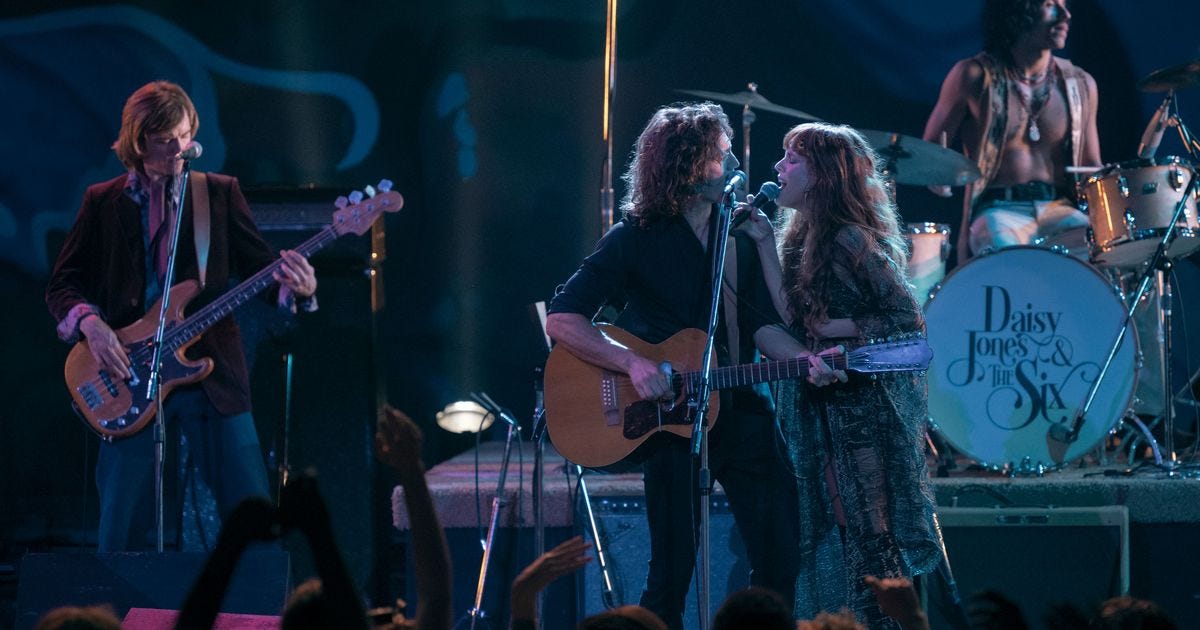
I know we’re not supposed to pit things against each other, and in many ways, Daisy Jones is nothing like Hot Wax and Gil & The Kills, but what am I supposed to do, not make connections? Not draw parallels? Please.
Ultimately the biggest difference between these stories is that, even though they’re both tragedies to some extent — we watch two separate bands fall apart right at the height of their careers — they each carry a different heart. Daisy Jones is about redemption, it’s about forgiveness and falling in love and looking back with fondness. It’s a golden roll of film that you found stashed in a box that your parents forgot to develop. But Hot Wax is about freeing yourself from the past, honoring where you came from but allowing yourself to exorcise your demons. It’s a breath you didn’t realize you were holding for twenty-nine years that you can finally release.
But even if the tones are different, if one is told through interviews and the other is explored through flashbacks and snapshots, these two stories still contain parallels. Scandal ran rampant through the music industry in the late 1900s (ouch, that phrase hurt to type), and there’s nothing more rock n roll than a band that makes ugly headlines.
However, I think the most striking difference is that DJ&TS feels like a romance (between who, only you can say) and HW is a horror story. Billy, Daisy, and Camilla run circles around each other, pushing sex and romance and partnership to the limit, and it’s that weird triangle of attraction that keeps the audience hooked. But Suzanne’s story is centered on her father Gil, his guitarist Eric Skillman (The Hands), and herself, a non-musician. HW doesn’t rely on romantic or sexual tension (at least, not in regards to this triangle), it instead creates a push and pull between two firecrackers and the little girl who’s waiting to see who will explode first.
Both of these tours revolve around the found family that comes with musicianship. DJ&TS feels more like a real family, with constant interview comments from side characters like Karen and Graham. There’s drama, there’s drugs and alcohol, but Billy tries to center things around his family and his love. There’s maturity there that makes everything feel so much worse, if only because we expected better of him. G&TK feels more like the Lost Boys, a family of heathens who never learned how to grow up. The focus lies not in a family band, but rather in the exploits of Gil and Skelly. Suzanne, our main character, spends most of her time running around, looking for her father or being corralled by Gracie and Doug. We barely even hear from half of the band in favor of the two leads. And yet, it is about family. It always was. Gil is ever Suzanne’s father. And even if he lost her in the custody battle, I’d argue that he did more for her than Nora ever did.
There’s something else to be said about the parallels between Suzanne and Julia, how each of these girls grew up in the industry and watched their dads live like rockstars…until they didn’t. Since Suze was a little older than Julia, she got more of a front-row seat to the drama, but Julia seeks out the story in a way that I think mirrors eleven-year-old Suzanne. While the older Suzanne has buried her past, desperately hoping to forget her summer on tour, that younger version of herself only ever wanted to be where the action was, camera in hand. Julia was kept safely out of harm’s way when Billy’s band toured, but that distance follows her until she comes of age and interviews everyone she can to understand exactly what happened in her youth.
We never get to see a full picture of what happened to the adults in Suzanne’s life. There’s no big reveal, no letter left by Gil or dramatic story-telling from Gracie. No tell-all interview like Daisy Jones & the Six. We don’t get to see any police reports, witness any trials, hear from the adults what really happened when Suzanne left the room, any room. And this is the real difference between Julia’s story and Suzanne’s. Often we don’t get closure from our childhoods, from our deepest traumas, from our parents. We can beg for their stories, but some stories aren’t ours to tell.
But there is something very poetic about how these stories end. Julia is suggested to reconnect Billy with Daisy, implying that they might make more records or fall in love or some secret third form of closure. The meta-ness of the book also leads the reader to believe that Julia’s interviews became public, finally telling the world the True Story of an infamous band that burned out long ago. Suzanne meets up with Gracie and reveals that Vince sent the 8mm tape of that final show in Vegas, and we’re left with the comment that Suzanne wants to show it to the world.
It speaks to the power of legacy and storytelling, how the main characters of these stories are not the infamous bands at the center, but rather the quiet witnesses in the wings. Or in both cases, the witnesses who had to fight and dig for the truth rather than trust or use their own experiences. For as much as Suzanne went on tour with the Kills, she still has a lot of gaps in her young memory. But both of these daughters grow up yearning to tell the world the truth about their fathers. They are uniquely situated to redeem those men, and depending on your view (half empty, half full), I’d argue that both of them do so. Or they are at least setting themselves up to do so sometime in the future.
“She made a life making other people’s memories and smothering her own. No time left to be herself. No room. ‘All I’ve ever been good at is telling somebody else’s story.’
‘You think that’s nothing?’ Gracie asked. She smiled wide enough to show her laugh lines, deepen the wrinkles around her eyes. ‘There is no “somebody” until somebody tells their story. The world needs witnesses.’”
apple…tree…
Possibly one of the biggest motifs in this story is that of blood versus water, born versus raised, the concept of family. From the get go, we figure out that Suzanne has a fucked up family life, stemming from a bizarre childhood, and that childhood haunts her into her forties. A child of divorce sure, but she’s also the child of a touring musician from the 80s. She spent age ten living on the road, surrounded by drugs and alcohol and bad decisions, no matter how much her father tried to protect her or shield her from them. And yet, one could argue that her father was a better parent than her distant, sometimes aggressive mother, if only because he loved her for who she was. One could even go so far as to argue that Suzanne was parented by the tour crew, by Gracie, by the band. Or that Suzanne was her own parent, learning how to problem solve on her own, spending most of her time alone, growing up very quickly from a young age.
More than once, this idea is brought up in the text. The line “Apple…Tree…” repeats itself, following Gil’s assessment when talking about Suzanne’s resemblance to him. And yet, as Suzanne gets older, she wonders if perhaps she grew into her mother Nora, marrying a “safe” man, giving up on her dreams, losing some of the Delgado spark that used to light her up. She even takes it one step further, questioning her parents’ hold on her, quietly asking herself if the real person who made her who she is was actually Eric Skillman. Did the Hands parent her when he saved her life and held her broken body, or did he parent her when he violated her and broke something deep within her?
Does it matter who the tree is so long as the apple grows?
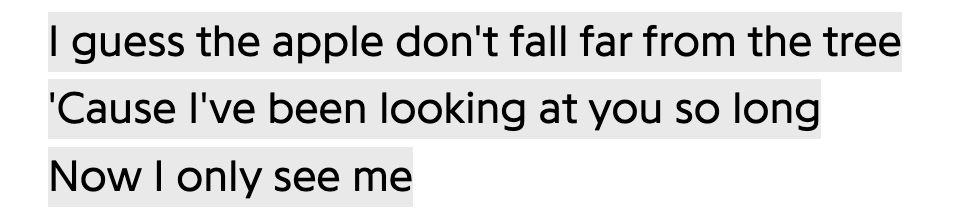
However, by the end of the story, I think it’s apparent that Suzanne’s truest mirror is her father. While she may not share his flamboyance, his shining personality, his stage appeal, there is a cyclical quality to their relationship. The blood that runs hot in Gil’s veins also runs in Suzanne’s, and at the end of their respective record sides, they both walk the same path.
I am, of course, talking about murder. Duh.
What’s so brilliant about how M writes this story is that you don’t really realize it’s a book about murder. We open the book with Gil’s passing, though we don’t know how it happens, and there’s not a lot of open grief on Suzanne’s part, as she’s actively trying not to think about anything too much. The emotional distance hides all of the trauma underneath, and unlike Villains, you have no idea who, if anybody, actually dies in the past timeline. You read the present tense searching for clues, trying to see who gets an IS and who gets a WAS, but there is a sense of a haunting walking through the narrative anyway. It’s a beautifully designed plot, especially with all the time jumps, because even though I was fairly certain Hands was already dead, I didn’t know how or when (or even who). And since so much of music in the 80s and 90s was about drugs and overdoses, it was much more conceivable that he’d stumble into cocaine than to stumble into a cracked skull. (Somehow he managed to do both.)
But then, after we witness (or rather, are whispered about, second-hand) Gil’s act of violence, we watch Suzanne make the same decision. The apple is still hanging on the branch, and she doesn’t hesitate, much as I can imagine Gil didn’t. Both instances feel almost justified, that Gil and Suzanne were being terrorized by someone they once trusted, once loved, and the only response to that betrayal was murder. At the end of the day, like father like daughter.
Suzanne spends most of the book oscillating between trying to imitate her father and desperately wanting to scrub him from her life. At ten, she wants to be his groupie, she wants to photograph his rise to stardom, she wants people to tell her just how much she looks like him. By the time she’s over forty, nearly three decades since he lost custody, she is trying to pretend like he doesn’t exist. And yet, he continues to haunt her. She hears his songs, wears his clothes, drives his car. No matter where she goes, his ghost follows her.
And so by the time we reach the end of the novel, when she has her pivotal fight with Rob, it feels like she’s battling Gil, playing tug of war, waiting to see whether she’ll claim his inheritance or step out of his shadow. She spends so much of the book running away — from her memories, from her parents, from the person she always secretly hoped she would be — and after everything, when it really matters, she leans on her father’s teachings. She runs that figure eight, but she also does not waver in protecting the person she loves.
Even though she spends most of her life feeling ashamed of being a Delgado, especially in the wake of the Hands’ death, this final claiming cements itself by the end of her story. Not only does Suzanne kill her demons (literally and figuratively) much like her father before her, she also steps up to claim his legacy as her own. She reveals that 8mm tape to Gracie, proclaiming that she wants to share it with the world, and it’s that final moment that gives her the closure she needs with Gil’s death. She was only ever his, even when she tried to refuse him, even when she wanted to deny it.
Regardless of who raised her — and one could argue she had many parents and she had no parents — it’s clear that she became who she is because of her father. Even if her mother tried to shape her, to control her and contain her, Gil won out. Suzanne became a photographer, became a music-junkie, became fiercely independent. Even though Suzanne was shaped by Skelly’s hands, even though the ghost of Eric Skillman followed her for decades and changed the way she connected with and saw the world, Gil won out. Suzanne made the same decision he did in killing Rob. But more than anything, she chose life on her own terms.
Maybe Suzanne and Gil’s mirrored actions could be viewed as a prison, that we are forever destined to follow in our parents’ footsteps, but I think they symbolize a breaking of chains. Freedom. Maybe the reason we hate our parents so much is because we see ourselves in them, and we hate looking in the mirror.
*clenches fist* women—
Before this book was released, M made it clear that she wanted to write commentary on women in the music industry. So going in, I was already looking for the WOMEN. Obviously our main character is Suzanne, a women in her forties (in her pre-teens?), but she is accompanied by other women like Gracie, Phoebe, Ruby, Nora, and Vince. While each of these women plays a different role in her story, they all stand on their own as strong female characters.
And yet, it really felt like a huge sausage fest for the first half.
I feel like there’s two popular ways to write WOMEN books. You can write it by cutting men out of the equation, huge female-lead casts with sapphics and womanly stereotypes and aesthetics, or you can write it by emphasizing just how patriarchal and masculine the world is. Both of them are obvious - either you’re imaging just how different the world would be with fewer men or you’re witnessing just how much hegemonic masculinity is affecting our world as it is - but they serve different audiences and different stories.
In many ways, it would be a disservice to write a book like this without emphasizing just how much men permeate our world. While I’d love to read a book about girl bands or female pop stars, Hot Wax is arguably about men. But it’s about how men’s power over women affects them so drastically. It’s about how the music industry, specifically in the 80s but even now, pushes women out and refuses to change. It’s about how men reject the notion that women are real people. And therefore, there’s a lot of fucking men in here, and most of them are pricks.
Even though we do get a woman at the front of a rock band, she is complicated, and arguably, we’re not supposed to like her. She causes a lot of tension in Gil’s band, she’s a leading cause of Skelly’s deterioration, and she is relatively unlikeable. She’s not nice. She’s not sweet. She’s a bitch. And Suzanne spends a lot of her youth wondering if it’s wrong for her to feel so unsettled by Vince’s person.
In fact, most of the women in this book aren’t likable. Nora is a bad mother, Gracie does her best but isn’t entirely blameless, Suzanne grows into someone who’s distant and cold… truly the most likable woman in the book is Phoebe, a queer woman of color who has her own small business and just wants to have fun.
There’s a lot to be said about why women are quick to be seen as unlikeable, why so many people (men, women, and other genders alike) refuse to see women as people with complex personalities and emotions — and yeah, it’s mostly just sexism — but I think sometimes that is the point. Women are allowed to be unlikeable. They do not exist, as characters or as real people, just to please you. Vince is a successful character not because we like her (although, maybe you do), but because she’s complex. Because she has depth. Because she’s her own person. Because even (especially) unlikeable women are worthy of attention.
I think a book like this is so successful not because it’s WOMEN-ORIENTED with pink frills and stereotypical gender norms, with easy-to-like women and girlie affectations, but rather because it digs into the meat of womanhood. It reflects on how sexism affects women in a male-dominated field and world. It demonstrates that women don’t owe men or society or their mothers anything at all.
“[She d]idn’t explain, because that much they couldn’t understand—how lonely it looked on the wrong side of thirty when everyone else was already married and starting a family. One by one you lost your friends to spouses and children. They forgot how to talk to you, invitations got lost in the mail, before long you realized you were just an odd number screwing up the seating arrangement. Staying single past a certain age was a social extinction event.”
And through all of that, it also highlights that not all women adhere to those stereotypical gender norms. Suzanne especially spends most of the book insisting that she does not want to have children, that she does not fit into a typical, straight marriage. This idea of a woman not wanting children plays against the typical characterization of women in adult litfic novels. It’s so rare to read about women like this, who don’t want marriage or kids or a home-life, who are independent and/or queer, who don’t fit in the box that society has built for women’s norms. It’s refreshing, it’s relatable, and it’s something publishing has needed for a long time. Especially with the added bonus of a queer, polyamorous relationship.
Even if the women in this book aren’t necessarily good people - if Vince destroyed lives and careers by being a bitch, if Suzanne literally killed her ex-husband, if Gracie helped cover-up a murder, if Nora was a bad mother - they explore the interesting complexities of womanhood. Men are allowed to be bad people all the time, in fact, they’re normally celebrated and sexualized for being fucked up, so why shouldn’t we do the same to women?
Vince DeWitt if you read this im free on Thursday night and would like to hang out. Please respond to this and then hang out with me on Thursday night when I’m free.
mr. incel man
Rob is such a fascinating character because I really was rooting for him at the beginning of his story. He appears to be a typical “nice guy,” someone who just wants to love his wife, start a family, be in love. He’s hurt that Suzanne left without an explanation, and up until he first figures out what she’s up to, it seems like they could have a happy ending, a reconciliation, even some kind of generous closure. But this is a tragedy, and in the end, Rob was only ever a man.
I’m deeply obsessed with how M wrote Rob’s character and his development. She crafts his beginning in such a way that you almost do feel sorry for him, like he’s the victim here, he’s the one who was wronged. Because yeah, it is a little insane that Suze just left him with no explanation, especially when we the reader do not get the full picture of their marriage (and its ending) until later. I started rooting for him as he raced across the desert. I wanted him to get his closure, whether he won Suzanne back or not.
But then, as with all men, the tables turn and Rob gets ugly fast. We witness his descent into madness as he starts to realize that his wife is queer, that she’s willing to act on her queerness. He’s intimidated by it, jealous of her new partner(s), enraged by her actions. The hunt becomes predatory rather than reconciliatory. It stops being just about Suzanne’s womanhood, but also about her sexuality.
“His wife was beautiful, and so were other women, but their beauty hadn’t mattered before the ugly revelation that she found them beautiful, too. He was reasonably confident in his looks when measured against other men, but women? That felt unfair, unnerving. Ironically, emasculating.”
When he finally catches up with her in Texas, we expect him to grovel or beg or at the very least, be nice, but he quickly devolves into the untamed beast he is. Throwing insults and punches alike until Suzanne and Simon can get away. And then it becomes an all-out sprint to the end of his story.
In a book that takes a swing at womanhood, how it’s abused in the music industry, how women in music are treated differently, how woman are held to motherly standards they do not always want, Rob is the Big Bad personified. His internal monologue becomes more and more steeped in the trappings of toxic masculinity, touching on that incel point of view that has poisoned so many men before him. He tells himself that he just wants to love Suzanne, to bring her home and care for her, but he refuses to admit that there is no love in his actions.
What’s so interesting is that he’s an all-together forgettable character. He’s a forgettable man, someone that Suzanne does not waste much brainpower on, to the point that we don’t even realize she’s married until we’re already underway. She does not miss him, she does not need him, and yet somehow he will not let her go.
Rob becomes the physical embodiment of everything Suzanne is fighting against. The men in that audionaut room, privileged and prickish. Her trauma from Skelly, hand under her swimsuit. The expectations of a world poised to create more mothers, more wives, more nuclear families. Her internalized falsity that she ruins everything. Rob is quite literally her demons stalking her deep into the desert, a ghost following her to a ghost town, waiting to be exorcised.
Luckily, her father taught her how to drive a figure eight.
clusterfuck(ers)
I am so glad we finally have reached a place where we can read books that are about queer people but that aren’t explicitly about discovering your sexual identity. Like we need coming out stories, but there’s something much more delicious about complex stories like this that center queerness without wasting time exploring how a character became queer. Suzanne just happens to be attracted to women and men. Or so we think. Who knows.
Obviously I really appreciated the throuple of Suzanne, Phoebe, and Simon, and I loved how simple their relationship was. Everyone else seemed to project concerns onto them — the age gap between the two of them and Suzanne, Rob’s distain and homophobia towards their lifestyle — and yet the three of them all work well together. They care for each other the way queer people do and they build a life that is unconventional but full of joy. If they hadn’t been caught up in an almost-horror story that lead to them committing a murder, they probably would’ve lived a fun life galavanting through the desert without a care in the world. But then, Suzanne would never get her closure, so.
I love that her queerness is never called into question. It’s just matter of fact. We don’t know when she figured it out, although it appears that she knew about that part of herself as early as sixteen, but it doesn’t really matter much. She is what she is, and she has bigger things going on. (I do wonder if Vince had anything to do with all that, but we’ll never know.) We never find out if Gil knows, although if Gracie is surprised, I’ll bet he had no idea. But I do find it interesting that he’s so hung up about her marrying Rob. I wonder what he would’ve thought of Phoebe.
“‘Jesus Christ,’ Doug said, though Christ had clearly left the building.”
What’s so powerful about queerness is that it often thrives under the surface. So much of the queer experience exists in subtext, in hints and whispers, in the behind the scenes. (In the closet, if you will.) We want obvious representation of homosexuality, because duh, but a lot of queer writers and stories exist in a liminal space between the lines. It’s about metaphors and symbolism, and M does such a brilliant job splitting her time between a canonically poly relationship and… *gestures to the Nebraska concert* whatever the hell that was.
The thing is, I don’t really think that Gil or Skelly are queer. There’s nothing in the text that suggests mutual attraction or blatant homosexuality, and yet, we still manage to have that moment in Nebraska that left me with my mouth hanging open in the middle seat of a plane. Partly because it’s scandalous, partly because of where that night leads, but mostly because it’s so visceral. It’s deeply descriptive, and the imagery we get is tantalizing. Add in a screaming crowd, some aggressive homophobia, and a night that ends in violence, and you have the recipe for something batshit insane. A clusterfuck, if you will.
(I’m not gonna lie, in that late scene right when Suzanne shows up to Skelly’s room to ask for a band-aid, I really did think she was about to walk into a gay orgy. I’m not entirely unconvinced that it wasn’t one.)
The Nebraska show alone is incredibly powerful and thrilling to read. From the first shout of FAGGOTS!, you hold your breath, and every sentence afterword is flooded with shock and awe and terror. There’s only gray area, no black and white right or wrong, and we the readers are forced to confront this strange contradiction: that this band is Straight on a surface level, but we also don’t have enough information to discount their Queerness in this moment. It calls into question what qualifies as queer, what makes someone queer, what queerness is allowed to be, especially since queerness is something that is so undefinable, so amorphous, so fluid.
And even outside of this concert, there are hints and whispers during other performances. I distinctly remember the moment when Gil spits into Skelly’s mouth, if only because it’s so descriptive. But even when they aren’t licking or spitting on each other, they still seem pulled together by magnets. They know each other’s bodies intimately, if only because they’re so close on stage every night, if only because they have to know each other so well in order to put on the kind of show that they do. Maybe they don’t kiss after work hours, but those two have definitely stuck each other’s tongues in their mouths on stage.
In some ways, I think this act of performance plays into the norms of the time, that a lot of rock n roll (then and now) has queer subtext (just look at Bruce Springsteen). M is pulling on her extensive music history knowledge, and whether any or all or some or none of this book is based on real people or events or shows, there’s no way she wasn’t influenced by history. And historically, there were definitely gay people back then. Think of Prince, think of Bowie, think of Freddie, think of any of the greats who launched into superstardom while also revolutionizing queer culture. A lot of this book feels like an homage to that type of artistry, to big costumes and huge productions and the androgynous sensuality that is often missing from modern acts nowadays.
I know many people will wish there was more explicit queerness in this book. More canon partnerships or explicit declarations. (As if we don’t have a poly throuple at the center of it all.) But as I said above, I don’t think queerness is that clear-cut. Sometimes it is, sometimes it’s three people making out in an airstream, but sometimes it’s a What is this? muttered under your breath. Sometimes, often, queerness is undefinable, something that does not fit into a label or a category. That’s what makes it queer.
Even though Suzanne makes it clear that she’s queer, that she’s in a queer relationship, that explicit queerness seems to take a backseat. We’re more focused on solving the mystery of Suzanne’s past, on figuring out why Rob is descending into homophobic madness, on bearing witness to Gil and his band than we are on watching three people make out in the summer heat. I think all these things can coexist, and none of that discounts just how openly queer this book actually is. Yeah, it kind of is a clusterfuck, but that’s half the fun of queerness, isn’t it?
on photography
“That’s not the point of a Polaroid. It doesn’t need the internet. It doesn’t even need an outlet. That’s what I like about it.”
I read this book on vacation over the summer, and on that same trip I decided to supplement this book with some Susan Sontag. Unexpectedly, I discovered that On Photography, her collection of photo essays, really paired well with Hot Wax. Our main character Suzanne is a queer female photographer, born in the late 70s, so she was raised shooting Polaroids. Sontag spends most of her essays ruminating on how tourism has democratized photography but it’s that democratization that has turned photography into some form of consumption, that we are collecting the world and yet in trying to capture it, we are distancing ourselves from the world itself and encouraging capitalism to boot.
“There is something predatory in the act of taking a picture. To photograph people is to violate them, by seeing them as they never see themselves, by having knowledge of them they can never have; it turns people into objects that can be symbolically possessed.” — On Photography, Susan Sontag
As a photographer myself, this portion of the book really resonated with me. It’s interesting to read about a photographer main character for obvious reasons, but especially because this main character is placed at such a distinct intersection in history. She’s old enough (early forties) to have spent her youth around film, and yet she too was forced to submit to the digital juggernauts that came later. She mentions how she’s disillusioned by the wedding industry, how she lost her spark for creative personal projects, how she stopped photographing her own life because all she knew how to do was photograph everyone else’s. She started using digital photography as a way to separate herself from the emotional connection of film, in part because it isn’t worth the cost of doing mindless business work on film but mostly because digital photography feels less intimate than film. Film photography is more intentional, more focused, more vulnerable than digital, especially for someone whose traumatic past is wrapped up in instant film.
And yet, so much of this story focuses on how she fell in love with cameras at a young age. We watch her buy her first Polaroid, how she saves for film, totes it around on the tour, trying her best to capture anything she can. She mentions how she saves film for the proper moment, how she’s terrified to abuse it, how she carefully plans her shots so she doesn’t run out of film when she needs it most. It’s that intention, that deep connection to her photography that feels so deeply Susan Sontag. (It’s also something I could intimately relate to, so that’s a bonus.)
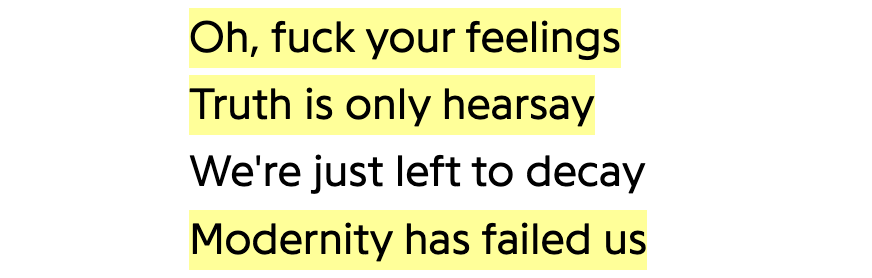
This is the world we began to lose when we transitioned to mostly digital photography. Our connection to images changed the moment photography became unlimited, the moment we could capture any and every moment in time without consequence. And M touches on this idea in other areas too, specifically the digitization of music. So much of this story is a love-letter to vinyl and CDs and physical music media, and I think that goes hand in hand with analogue photography. The modernization of art was revolutionary, it opened the door to the average, low-income consumer, but it also killed something. Modernity altered society to be greedier, more self-centered, more aggressive, and this is especially true of photography. As a hobby, as a tool, as an industry, we have commercialized and weaponized photography, and Suzanne has become jaded as a result of that.
It’s the younger Suzanne that really reminds me (and Suzanne herself) how powerful and important photography can be. While I’m sure her photos were nothing special, they became invaluable as time went on, much like Sontag touches on in her essays.
“Time eventually positions most photographs, even the most amateurish, at the level of art.” — On Photography, Susan Sontag
By the end of the book, after Gil’s passing, after so much has been lost to time or taken from Suzanne, she still manages to hold on to some of those precious photos, smuggled away in a fridge. While she spends most of the book doubting her talent, wondering what she has to offer when she can’t play a guitar or write a hook, Gracie gently reminds her that she has power. She’s the only person who recorded the final concert. She’s the only person who captured that tour so intimately.
I think photography does a lot of legwork in here, almost as if it’s acting as a physical manifestation of Suzanne’s heart and passion. She found photography (and music) when she was a kid, and so much of her joy in that hobby is connected with Gil and the band. After that disastrous tour and Skelly’s death, she continues to take music and photography seriously, even going so far as to make them a part of her career, but over time that passion fades away. Her hobbies become a chore, she becomes beaten down by the trappings of the industry, and when we meet her after forty, she’s lost that Delgado spark that started it all. It speaks a lot to the typical crises of being a creative, that even if you love to create art, you will get burnt out on it eventually at one time or another.
But it’s clear that this is more than just a creative block. Suzanne’s heart has frozen and broken, and the passion fades away because she refuses to look her past in the face. She does not know how to acknowledge her complex feelings for her father, and now that he’s dead, she can’t find the closure that she needs. She cannot touch photography because it reminds her of that tour, of her past, of Skelly’s hands, and yet somehow it is photography (or in this case, videography) that saves her in the end. The 8mm tape she filmed in Vegas becomes her salvation in many ways. Once she accepts and acknowledges that this part of herself deserves to be loved once more, everything clicks into place.
“Smile,” she said. But the Hands covered his face, vanishing in a thicket of black knucklebones. She was about to put the camera down, but then he spread two fingers, peeked out at her from in between, and winked. Kssshhhhhhk. She felt a little thrill of pride and pleasure. Sure she’d captured something elusive, something rare and cryptic.”
what’s my age again?
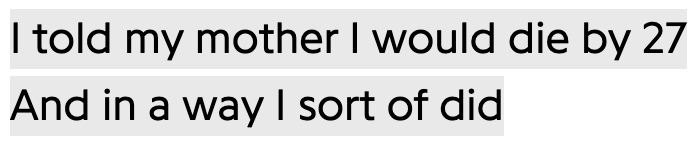
One of the coolest things about this book is that it plays around with age in a delicious way. Half of our chapters are narrated by a ten-year-old, and most of the rest of them are narrated by that same girl at age forty-one. We are forced to pay attention to age, because it is important, and yet most of the time it’s difficult to remember just how old everyone is.
As someone on this side of thirty, I spent most of this book reflecting on the idea that you don’t really notice age until your thirties. You see it in your youth, you know that everyone else is usually older than you, either by a lot or a little, but you have no perspective. At ten, the entire world feels enormous and everyone is decrepit and elderly. But after you turn thirty, you start to realize just how long life is, how young everyone is. You’re still young, and yet somehow you’re old. Fifteen feels light-years away, but somehow you still cannot comprehend entering your sixties.
I became weirdly fixated on the ages of these characters, mostly because I could not calibrate my brain properly to understand them.
“Everyone seemed to see her future so clearly, could imagine her eleven or twenty-seven. But they all saw something different, and they couldn’t all be right. Suzanne didn’t know who to believe, wasn’t sure if growing up was something you did or something that just happened to you.”
It’s rare that you get an adult book narrated by or centered around a child, but I think this was the perfect avenue for telling this story. In part because it added a level of impropriety that made the flashbacks on tour that much more risqué, but mostly because it calls into question the reliability of the narration. Not only did we not have access to rooms or characters, but the things that Suzanne saw or remembered, didn’t always give us all the information we wanted. She focused a lot on her dad, on Skelly, on Gracie, but what about Ruby or Nash? She spent a lot of time with Doug, but we rarely saw her come in contact with the drugs and alcohol that must have run rampant during the afterparties and late nights.
And of course, by the time we reach the end of side A, there’s that pivotal scene that we will never fully understand. Suzanne visiting Skelly’s room, already naïve and oblivious toward the obvious drugs permeating the tour. We the reader notice a lot of things she doesn’t, how the boys laugh when she asks for Coke, Skelly’s wandering hands, her body’s reaction to a foreign substance (or two) in her blood. By the time her dad kicks her out, we lose our only in to knowing just what’s about to happen. She hears things, but we don’t get any details or context until she is told by a separate third-party that someone bashed Skelly’s skull in with his guitar.
But what got me most about this scene, this moment, this part of the book, is that only then, after his violent death, does the narration reveal that he fell victim to the young musician’s curse: he died just five days before he joined the 27 club. Not that I really thought he was old, but we learned early on that Gil was in his mid/late 30s around then, so I really spent most of the book imagining Skelly as closer to my age. Older than me maybe. But he was 26! He was only about fifteen years older than Suzanne! (And that fact alone makes the wandering Hands better and worse and the same as if he were actually old, trying to make a pass at Gil’s young daughter.)
For a book that makes commentary on a long list of things, this is just another drop in the bucket. But it’s less interesting witnessing Skelly die before he turned twenty-seven and more interesting to know that yes, he was doing drugs, but it wasn’t the drugs that physically killed him. Sure, they led him down that dark road to the end, cultivating the Void that Suzanne kept noticing, but M managed to turn the cliché on its head by flipping the script to murder.
“Her younger selves grew more distant over the years, receded until they might as well have been casual acquaintances—people she recognized but barely knew. Probably better that way.”
All of this works together to create a very fucked up adult when we meet Suzanne at forty-one. But so much of the adult Suzanne’s story dances around her childhood trauma, showing the effects of her issues without outright discussing them on the page. We the reader and she Suzanne know what happened back then, but there is no rehabilitation in the present. Instead, the adult Suzanne spends most of her time reconciling with the fact that she is now the one who is a lonely, approaching-middle-age, adult. She’s fifteen years older than Skelly ever was, and yet she’s coming out of an unhappy marriage, she’s creatively bankrupt, and her father recently died. She feels her age, and we the readers feel it with her. In many ways I was acutely aware that I am not in my forties, and I’m still glad for that, but in other ways, I think this reminded me that forty is still very young. Thirty, the age I am now, is a strange extension of youth too, but there is still a huge distance in the four years between twenty-six and thirty.
The more we learn about Suzanne and her past and her present, the more we start to come to terms with how young everyone was in the past. How her father was younger than she is now when they went on tour. How Vince was only twenty when she was causing trouble and selling out concerts. How Gracie managed to have a full career ahead of her after her big band hit rock bottom. Maybe this is just proof of my age, that I spent so long fixated on age itself while reading, but I think the wide range of ages throughout the story adds some insane depth and perspective that you really only get through real life experience. I feel like I understand forty better than I ever did, and I still have a decade until I get there.
outro
I was already committed to M.L. Rio as a writer, but now that we have a follow up to the debut (and Graveyard Shift, but that’s a novella) I feel like I can officially confirm what I knew all along: M is a powerhouse and I’ll read anything she writes. She is also the coolest person I’ve ever met. (I think I spent the entire meet and greet shaking like a chihuahua, I was so nervous. She’s hot AND smart AND intimidating as hell!!!!)
Even though she’s uniquely herself and nobody is doing it like her, I do feel like she has the same drive and talent as my other favorite writers - Samantha Shannon, R.F. Kuang, V.E. Schwab. The intensely cerebral, academic variety of (queer) women who have an obscene amount of degrees. Every time I hear these authors speak, I am fascinated by their craft, their intelligence, and their unique special interests. They all scratch a very specific itch in my brain, and I feel so lucky to get to exist while they’re publishing books.
It’s so special getting to read fiction written by academics because I feel like they have such a strong focus on craft that is often missing in non-academic writing. The older I get, the more I want to be studying texts instead of just devouring them, and M does an incredible job layering her works with references and metaphors and deeper meanings. This is the kind of book I will relish in rereading because there’s so much hidden under the surface.
Anyway. I’m done now.
Below you’ll find a playlist that is inspired by the book itself as a whole, and also a playlist that sounds like the in-book band, Babel Mouth. It’s mostly just fem alt-rock. I wanted to pretend like Vince Dewitt is a real person. (And to me, she is!!)